

Picking a niche is the single most important decision you will make before building your coupon website. It determines your competition, your affiliate commissions, your site structure, and ultimately whether your platform grows into a real business or gets buried on page five of Google.
This guide is written specifically for affiliate publishers. Whether you are planning to launch a coupon website or already run one and want to expand into more profitable territory, every section here is written from a builder’s perspective, not a shopper’s.
Each niche is evaluated on what actually matters to you: affiliate commission structure, traffic opportunity, ranking difficulty, and what your site needs to convert that audience.
Why Your Niche Choice Shapes Everything, Including Your Tech Stack
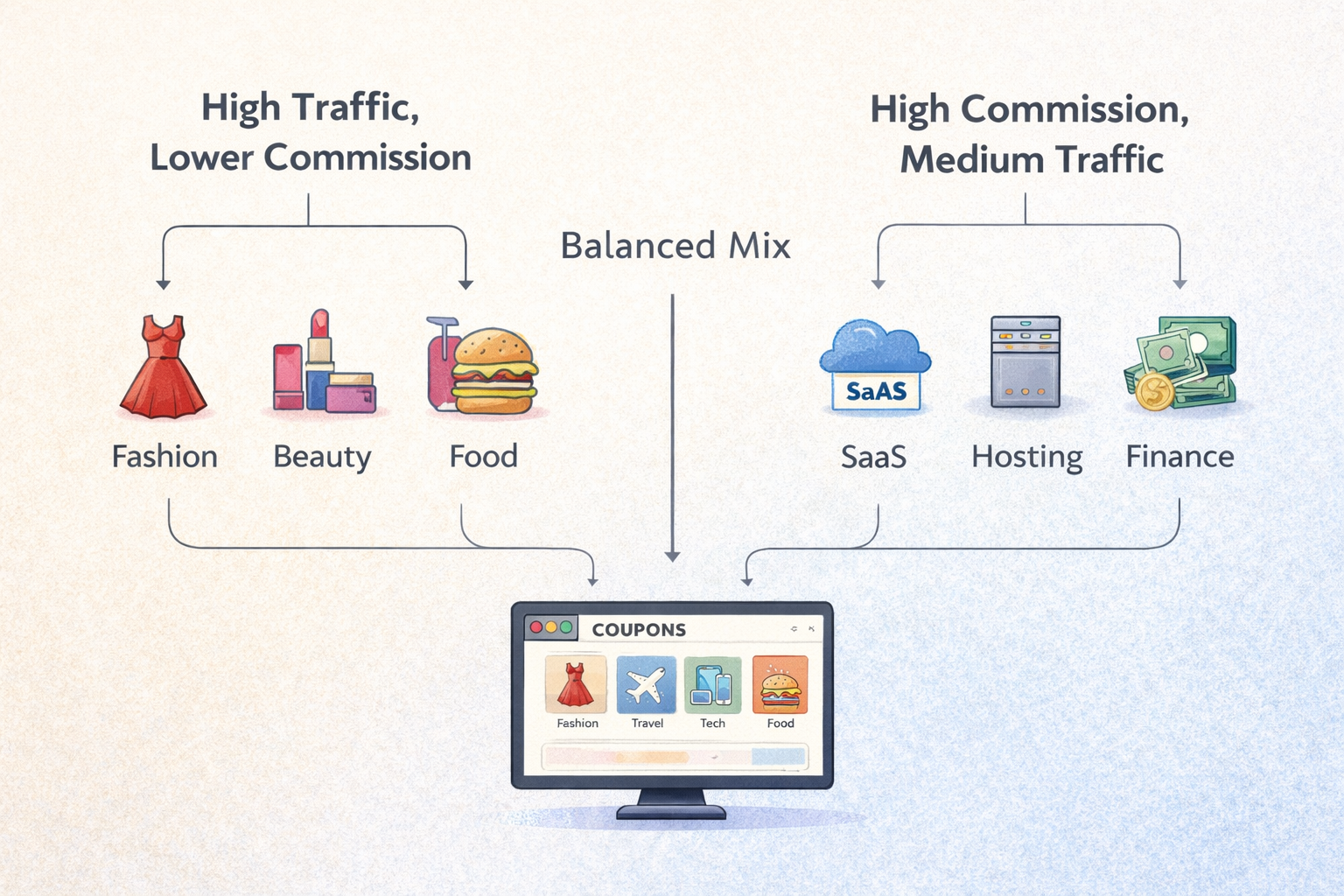
Niche selection goes far deeper than just picking a topic. It determines three critical things:.
Your niche determines your SEO strategy. Some niches are dominated by high-authority comparison sites, meaning you need strong topical depth and content volume to compete. Others have exploitable gaps you can fill quickly with focused category pages.
Your niche determines your affiliate revenue model. Fashion pays percentage commissions on modest order values. SaaS pays recurring monthly commissions. Web hosting pays flat bounties of $50 to $200 per signup. These structural differences compound significantly as your traffic and conversions grow.
Your niche determines what your site needs to do. A food delivery coupon site needs geolocation and mobile-first design. A SaaS deals site needs comparison tables and feature breakdowns. A travel site needs deep filtering by destination, date, and trip type. Choosing your niche without thinking about your platform is a mistake that costs publishers months of rework later.
This is exactly why a purpose-built WordPress coupon theme matters. Managing coupons, stores, categories, expiry tracking, and affiliate links requires a structured system that general blogging themes are not designed to handle efficiently. ClipMyDeals is built specifically for this use case, with features like coupon management, store/category structure, bulk import, and flexible display settings, so your niche strategy and your site capabilities grow together from day one.
At a Glance: How the 10 Niches Compare
Before going deep on each niche, here is a side-by-side view of how they stack up across the metrics that matter most to a coupon publisher.
| Niche | Commission Type | Avg. Commission Rate | Traffic Volume | Keyword Competition | Best Revenue Driver |
|---|---|---|---|---|---|
| Fashion and Apparel | Percentage | 4% to 12% | Very High | Very High | Volume of brand-specific searches |
| Electronics and Gadgets | Percentage | 1% to 5% | High | High | High product order values |
| Travel and Hotels | Percentage + flat | 3% to 8% | High (seasonal) | High | Large booking transaction values |
| SaaS and Software | Recurring % or flat | 20% to 40% recurring | Medium | Medium | Recurring monthly commissions |
| Online Learning | Percentage | 10% to 45% | Medium-High | Medium | High commission on digital products |
| Food Delivery | Flat bounty | $5 to $25 per signup | Very High | Medium | Volume of new user conversions |
| Beauty and Cosmetics | Percentage | 5% to 15% | Very High | High | Repeat purchases, brand loyalty |
| Gaming and Digital | Percentage + flat | 5% to 15% | High | Medium | Digital product margins |
| Web Hosting | Flat bounty | $50 to $200+ per signup | Medium | Very High | High per-conversion payout |
| Financial Services | Flat bounty or rev share | $20 to $200+ per lead | Medium | Extremely High | Highest per-conversion payout |
Use this table as your quick-reference when evaluating which niche to start with or which to add next to your existing site.
For more details, explore the LinkMyDeals Affiliate Programs Directory—a free tool that features over 250,000 affiliate programs across 120+ networks. It helps you discover the best opportunities by providing comprehensive information on each program, including commission rates, advertiser availability within affiliate networks, and direct signup links for your convenience. Simply search for the store you want to promote, and the platform will instantly show you all the relevant program details.
1. Fashion and Apparel
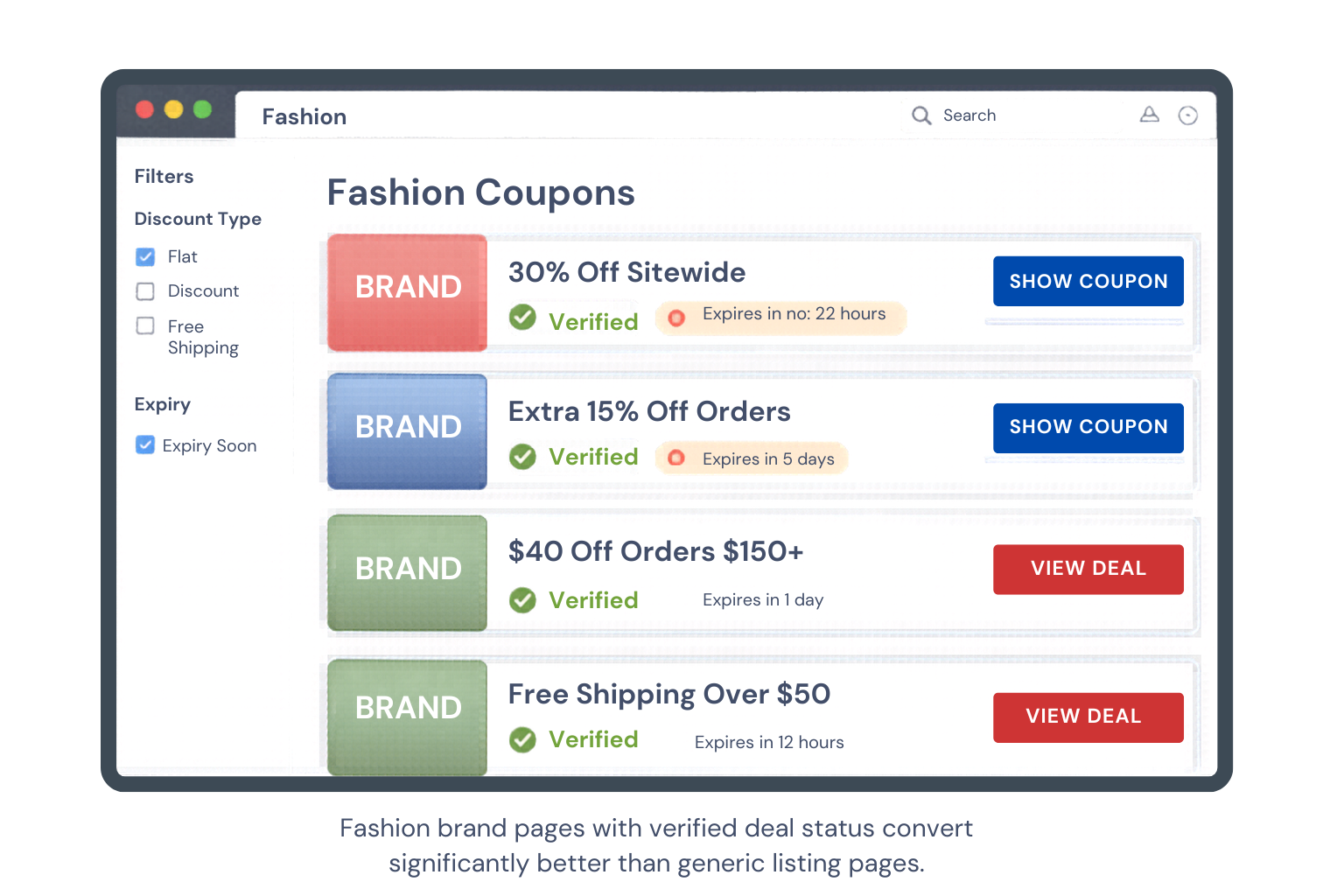
Commission model: Percentage-based (typically 4% to 12%) Average order value: $50 to $200 Traffic volume: Very high Keyword competition: Very high Best for: Publishers who can produce high content volume or have SEO experience
Fashion is one of the most searched coupon categories online. Consumers regularly look for promo codes before purchasing from brands like Nike, ASOS, H&M, and hundreds of direct-to-consumer labels.
Seasonal sales tied to events like back-to-school, Diwali, Black Friday, and summer clearance create predictable traffic spikes you can plan content around months in advance.
The challenge is competition. Fashion coupons are dominated by large affiliate publishers with established link profiles. New sites need either a regional focus (Indian fashion brands have far less competition than global ones), a sub-niche within fashion (sustainable clothing, plus-size brands, luxury resale), or a high volume of well-structured category and brand pages to compete.
What your site needs: Clean brand-level coupon pages with expiry dates, verified status badges, and recently-used timestamps prominently displayed. Users in this category are skeptical of expired codes, so real-time verification and usage signals improve conversion significantly. Your coupon theme should support custom brand pages with logos, deal counts, and filtering by discount type such as percentage off, free shipping, or seasonal offers. You can also scale faster by using coupon feeds like LinkMyDeals or CouponAPI to keep your deals updated automatically.
Strong affiliate programs to start with: ASOS, Myntra, Ajio, Nordstrom, Adidas, Lululemon, H&M, Shein, Zappos, TOMS
2. Electronics and Gadgets
Commission model: Percentage-based (typically 1% to 5%) Average order value: $150 to $1,500+ Traffic volume: High Keyword competition: High Best for: Publishers comfortable writing technical content or product comparisons
Electronics buyers research before they buy. The research phase, comparing specs, reading reviews, hunting for the best price, is where your coupon site intercepts them. A person spending three weeks deciding between two laptops will check for promo codes before clicking Buy.
Commission percentages in electronics are lower than most other categories. Amazon Associates pays 2.5% on electronics. But the math still works when products cost hundreds or thousands of dollars. A single $1,200 laptop sale at 3% earns more than ten $40 fashion items at the same rate.
The opportunity lies in specific product verticals. Smart home devices, audio equipment, photography gear, and EV accessories are growing segments with noticeably less keyword competition than smartphones and laptops.
What your site needs: Price drop tracking and deal alert features are especially valuable here because electronics prices fluctuate frequently. Your site should let users browse by brand and product category, with deal pages showing both the coupon code and the current price. Adding price comparison functionality can further improve conversions by helping users choose the best deal instantly. Comparison tables between similar products, showing specs and discounts side by side, increase time on site and affiliate link engagement.
Strong affiliate programs to start with: Amazon Associates, Samsung, Dyson, GoPro, Canon, Sony, LG, Acer, Microsoft, Verizon
3. Travel and Hotel Deals
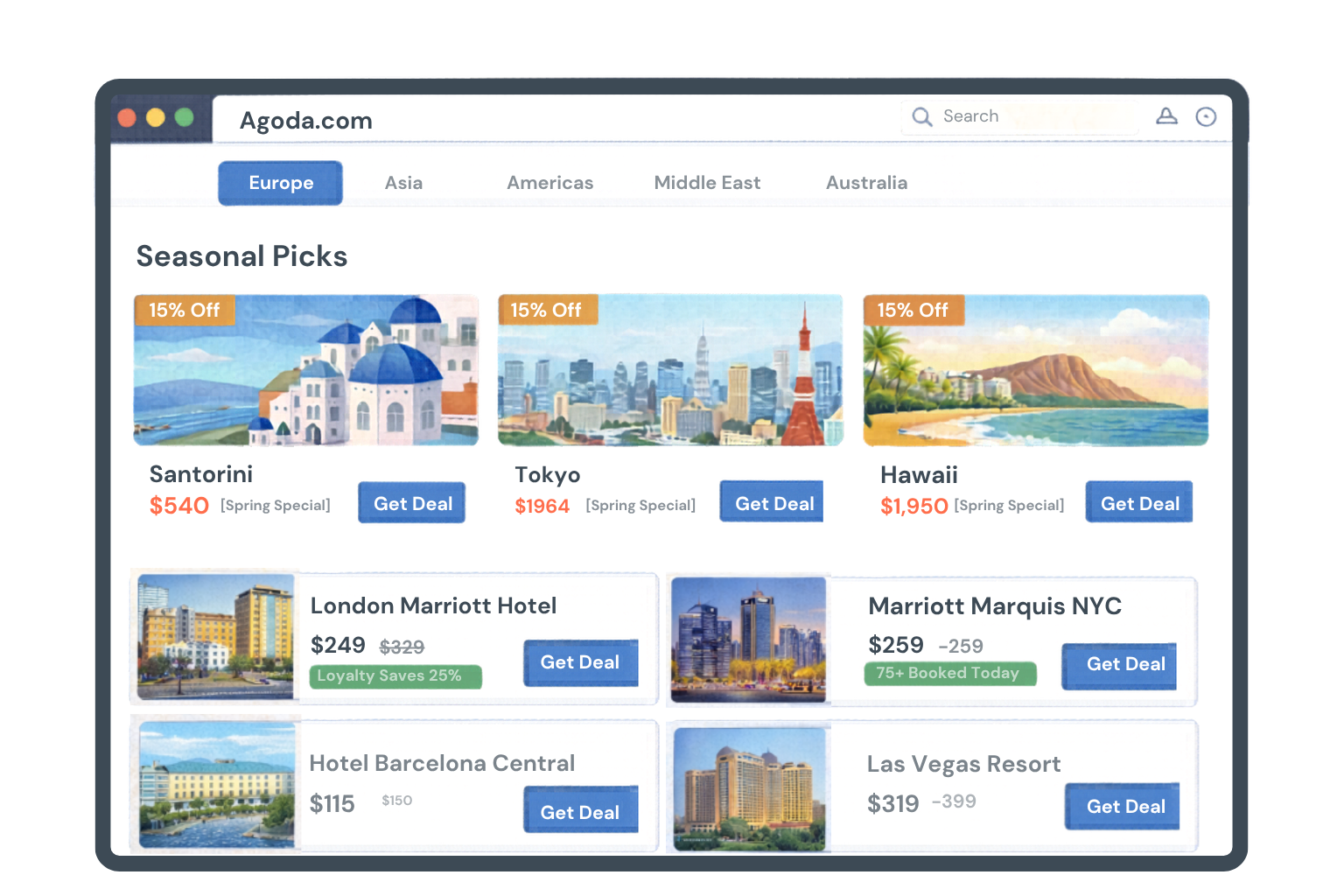
Commission model: Percentage of booking value or flat fee per booking Average order value: $300 to $3,000+ Traffic volume: High (strongly seasonal) Keyword competition: High Best for: Publishers willing to build destination-specific content at depth
Travel is a high-value category because booking transactions are large. A 4% commission on a $1,500 hotel booking is $60 from a single conversion.
Multiply that across a site attracting thousands of monthly visitors with purchase intent, and the revenue potential is real.
The category has also expanded beyond hotels and flights. eSIM providers like Airalo for international travelers, activity booking platforms like Viator, and niche accommodation options have created fresh affiliate opportunities with higher commission rates than legacy travel brands typically offer.
The main challenge is seasonality. Travel traffic drops sharply outside peak booking periods. The way to counter this is with evergreen destination content that generates traffic year-round and funnels readers toward your current deals.
What your site needs: Destination-based filtering is essential for travel coupon sites. Users should be able to filter deals by region, country, and trip type such as family, solo, adventure, or luxury. A homepage that surfaces seasonal promotions at the right time of year, summer Europe deals in spring or winter sun packages in autumn, helps match user intent to your inventory. Mobile optimization is critical because much of travel research happens on phones.
Strong affiliate programs to start with: Booking.com, Expedia, Skyscanner, Airbnb, Viator, Airalo, Marriott, Hertz, Tripadvisor, Contiki, Agoda.
4. SaaS and Software Deals
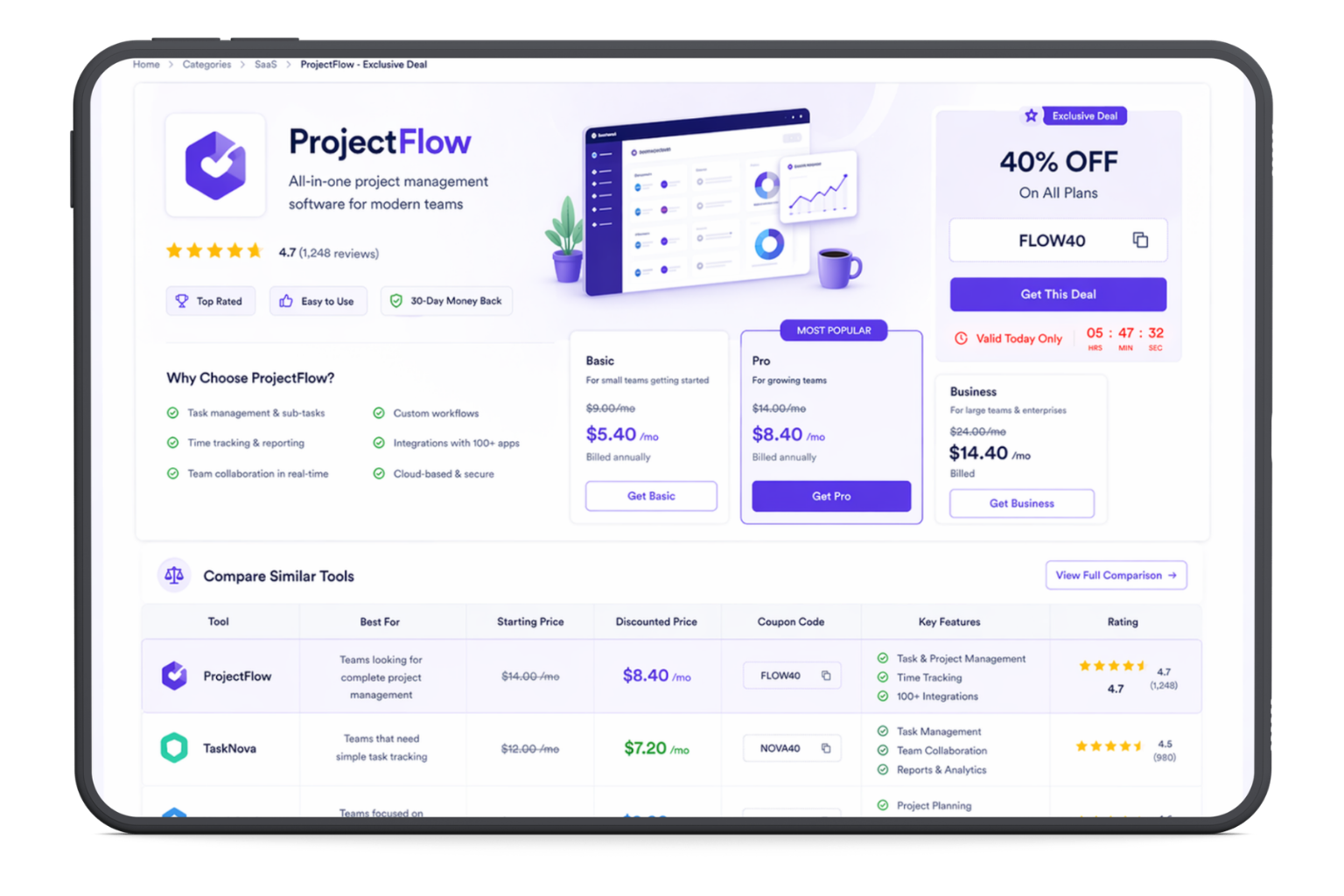
Commission model: Recurring percentage or large flat bounty Average order value: $10 to $300 per month (subscription) Traffic volume: Medium Keyword competition: Medium Best for: Publishers with interest in business tools, marketing software, or creator platforms
SaaS is the category with the highest long-term revenue potential for coupon publishers. Software companies pay generously to acquire customers because once someone subscribes, they often stay for years.
A customer paying $100 per month for a marketing tool generates $1,200 annually. At 20% recurring commission, that is $240 per year from a single referral.
Many top SaaS affiliate programs are structured exactly this way. HubSpot, Semrush, ActiveCampaign, ConvertKit, and ClickFunnels all pay recurring or high-value flat commissions.
The SaaS audience is different from retail coupon hunters. These are business owners, freelancers, marketers, and creators looking for the best tools at the best prices. They respond to comparison content, feature breakdowns, and lifetime deal offers through platforms like AppSumo.
What your site needs: SaaS coupon pages need more context than a standard retail listing. A visitor landing on a “Semrush promo code” page wants to know what Semrush does, which plan the deal applies to, and whether the offer is worth it. Your site should support extended deal descriptions, feature highlight sections, user ratings, and structured comparison tables to help users evaluate tools before converting. Category pages organized by use case, such as email marketing tools, SEO software, or project management, outperform generic software listings.
Strong affiliate programs to start with: HubSpot, Semrush, Shopify, ClickFunnels, ActiveCampaign, ConvertKit, AWeber, Podia, beehiiv, 10Web, Systeme.io
5. Online Learning and Courses
Commission model: Percentage-based (typically 10% to 45%) or flat fee Average order value: $15 to $500 per course or subscription Traffic volume: Medium to high Keyword competition: Medium Best for: Publishers who can create skill-specific or career-focused content
Online learning platforms attract tens of millions of learners globally across Udemy, Coursera, MasterClass, and Skillshare. The affiliate commissions are generous because digital courses have near-zero distribution costs, meaning platforms can share more revenue with publishers than physical product retailers can.
This category also carries a counter-cyclical advantage. When the economy tightens and people become concerned about their career prospects, enrollment in professional development courses goes up. Your site becomes more valuable precisely when other retail categories slow down.
The strongest opportunity right now is in professional certification content. Cybersecurity, cloud computing, data science, and digital marketing courses attract motivated buyers with strong purchase intent and willingness to spend.
What your site needs: Organize deals by skill category (technology, business, creative, language) and by platform. Search functionality matters here because users often arrive with a specific course or skill in mind. Udemy in particular runs frequent site-wide sales that benefit from time-limited deal pages your theme can schedule and expire automatically. Showing original price versus current price prominently increases urgency and click-through.
Strong affiliate programs to start with: Udemy, Coursera, MasterClass, Skillshare, Teachable, Rocket Languages, LinkedIn Learning
6. Food Delivery Coupons
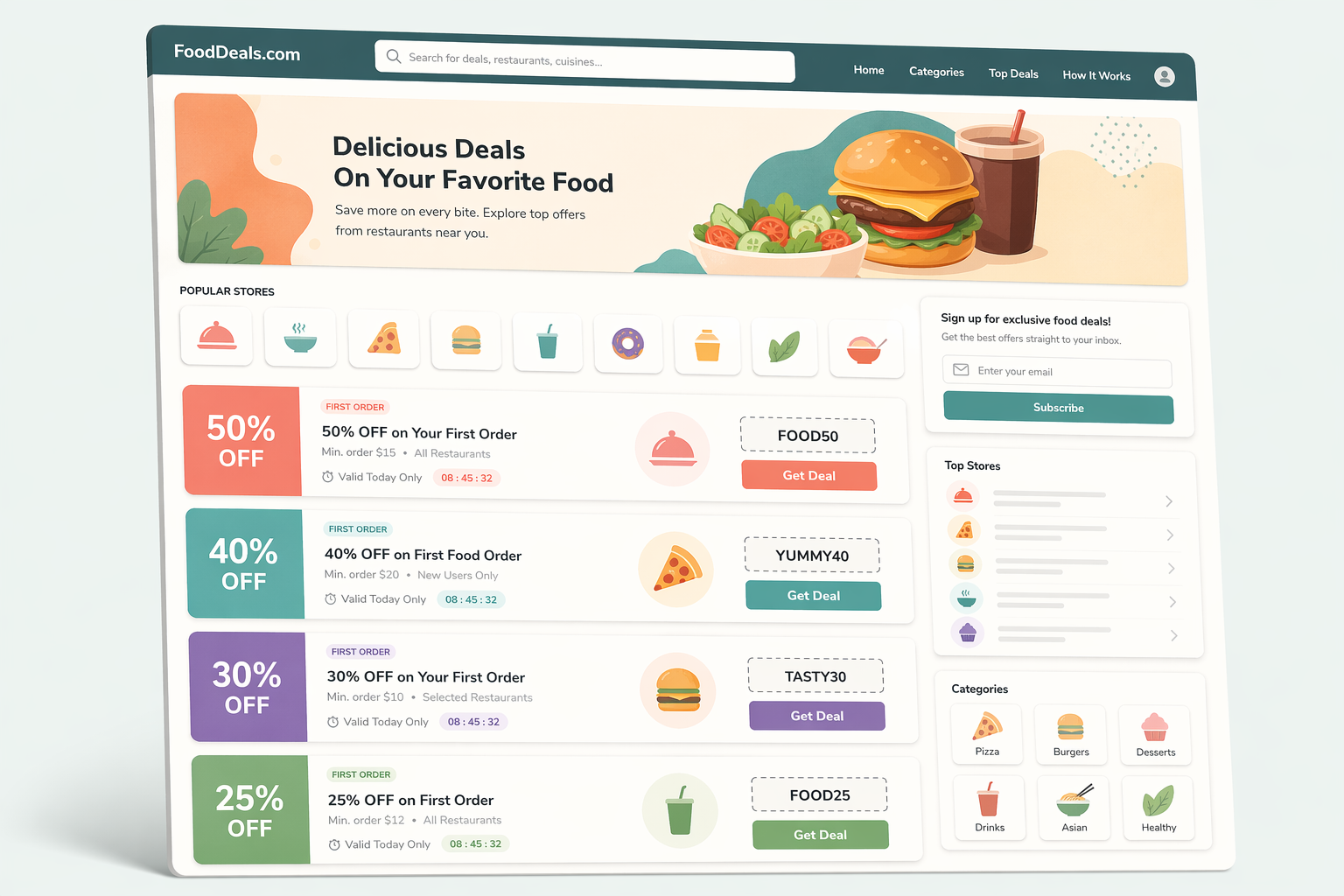
Commission model: Flat bounty per new customer (typically $5 to $25) Average order value: Not applicable (bounty-based) Traffic volume: Very high Keyword competition: Medium Best for: Publishers targeting mobile-first audiences in specific cities or regions
Food delivery is a volume game. DoorDash, Uber Eats, Grubhub, Swiggy, and Zomato pay flat fees when a new customer signs up or completes their first order, not a percentage of ongoing orders. Revenue therefore scales with new user acquisition rather than order values.
The good news is that search volume for food delivery codes is enormous, and many of the searches are local and specific. Queries like “Swiggy promo code Mumbai” or “Zomato discount first order” carry lower competition than national terms, meaning new publishers can rank faster with a geographic content strategy.
Meal kit delivery services such as HelloFresh, Home Chef, and Sun Basket typically offer higher bounties and better commission structures than on-demand delivery apps, making them worth prioritizing in your deal inventory.
What your site needs: Geolocation-aware deal listings are a significant advantage in this niche. A visitor in Pune should see Zomato and Swiggy deals first; a visitor in Chicago should see DoorDash and Grubhub. Your platform should also prominently display “first order only” restrictions since most food delivery deals apply only to new customers. Surfacing this clearly prevents user frustration and builds the trust that keeps visitors coming back.
Strong affiliate programs to start with: DoorDash, Uber Eats, Grubhub, HelloFresh, Instacart, Home Chef, Sun Basket, Swiggy, Zomato
7. Beauty and Cosmetics
Commission model: Percentage-based (typically 5% to 15%) Average order value: $30 to $200 Traffic volume: Very high Keyword competition: High Best for: Publishers with content reach in lifestyle, wellness, or beauty communities
Beauty is a repeat-purchase category. Consumers buy their skincare, makeup, and haircare products on a regular cycle, which means they return to find new codes repeatedly. Build trust with a beauty audience once, and you generate recurring affiliate revenue from the same visitors over time.
The category splits into two segments with different affiliate profiles. Large multi-brand retailers like Sephora and Ulta offer lower commission rates (3% to 6%) but convert well because consumers already trust these platforms. Direct-to-consumer and indie beauty brands often offer 10% to 15% commissions to incentivize publisher promotion, but they require more editorial content to convert.
Indian and Southeast Asian beauty brands represent a strong opportunity right now. The consumer base is growing rapidly, social media engagement is strong, and affiliate publisher competition is far lower than in Western markets.
What your site needs: Beauty coupon pages work best when deals are organized visually by category (skincare, makeup, haircare, fragrance) with brand logos and product imagery. User-submitted codes with community voting can be a strong differentiator because beauty shoppers are skeptical of generic aggregator sites. A trending deals section that surfaces seasonal launches, holiday gift sets, and brand anniversary sales keeps content fresh and gives you recurring SEO hooks throughout the year.
Strong affiliate programs to start with: Sephora, Ulta Beauty, Lookfantastic, Nykaa, Fenty Beauty, MAC Cosmetics, Paula’s Choice, Glossier, ELEMIS, Clinique
8. Gaming and Digital Products
Commission model: Percentage or flat fee; recurring for subscriptions Average order value: $15 to $500 (hardware considerably higher) Traffic volume: High Keyword competition: Medium Best for: Publishers with an existing presence in gaming or creator communities
Gaming brings one of the most engaged audiences in affiliate marketing. Gamers are brand-loyal, community-driven, and comfortable making purchases online. They also have a high tolerance for digital purchases including game keys, in-game currency, streaming subscriptions, and creator tools, which opens up multiple commission streams beyond hardware.
The digital side of the gaming ecosystem is where the real affiliate opportunity sits. Hardware margins are thin and commissions reflect that. Game key marketplaces like CDKeys, Fanatical, Kinguin, and Green Man Gaming offer 5% to 15% commissions on products that sell in high volumes.
The growing streamer and content creator segment is a high-value adjacent audience. Creator tools like Canva, StreamYard, and OBS-compatible software appeal to this group and often carry stronger commission rates than game keys alone.
What your site needs: Gaming coupon sites perform best when organized by platform (PC, PlayStation, Xbox, Nintendo, mobile) and deal type (game discounts, hardware deals, subscription offers). A “Deals Expiring Today” section creates urgency and drives repeat visits. This audience is primarily desktop and responds strongly to clear price displays showing original versus discounted pricing rather than vague percentage-off labels.
Strong affiliate programs to start with: CDKeys, Fanatical, Green Man Gaming, Humble Bundle, Razer, SteelSeries, NVIDIA, Corsair, Alienware, GameFly
9. Web Hosting and Domain Deals
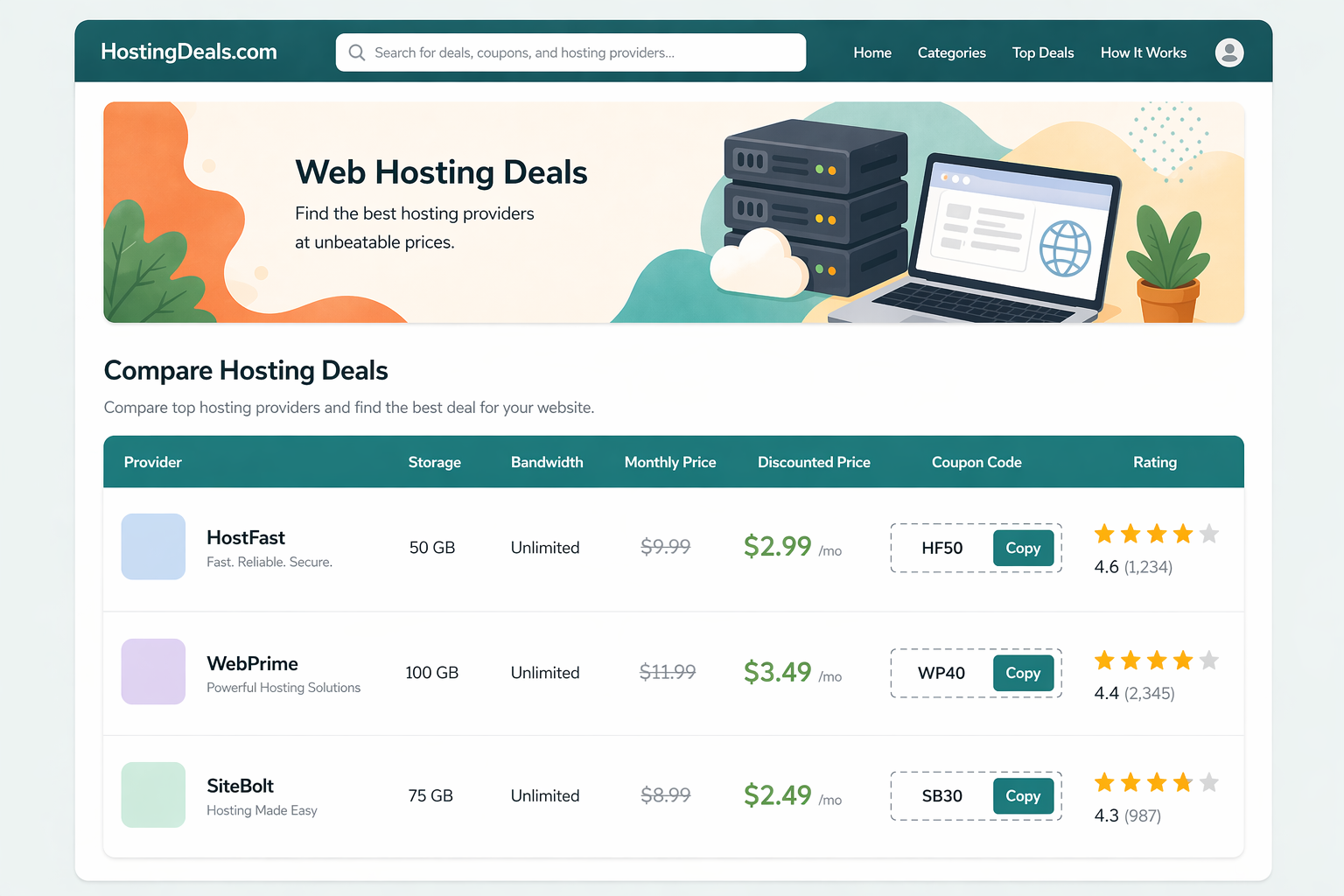
Commission model: Flat bounty (typically $50 to $200+ per signup) Average order value: Not applicable (bounty-based) Traffic volume: Medium Keyword competition: Very high for top brands, medium for niche providers Best for: Publishers who can produce technical comparison content
Web hosting is among the highest-paying affiliate categories available to coupon publishers. Bluehost pays up to $65 per signup. Kinsta pays up to $500 for enterprise plan referrals. The reason is simple: hosting customers stay for years and generate long-term recurring revenue, so providers can afford large upfront acquisition costs.
Competition for terms like “best web hosting” or “Bluehost discount” is intense. Established affiliate sites with years of domain authority dominate these keywords. The path for newer publishers is through specificity: “best WordPress hosting for WooCommerce,” “managed hosting for small agencies,” or “cheapest hosting India” are all realistic targets for a site building its authority.
This niche is also uniquely well-suited for ClipMyDeals publishers. Your audience consists of people building websites, the same audience that needs hosting.
What your site needs: Comparison table functionality is essential here. A visitor searching for hosting deals wants to see plans side by side, comparing storage, bandwidth, price, support quality, and current discount in one view. Your site needs structured comparison pages, not just basic coupon listing cards. Review content that pairs with your coupon pages matters too because hosting is a trust-heavy purchase that no one makes based on a code alone.
Strong affiliate programs to start with: Kinsta, Bluehost, Cloudways, GreenGeeks, Scala Hosting, WPX Hosting, iPage, Hostinger, SiteGround
10. Financial Services and FinTech
Commission model: Flat bounty or revenue share (typically $20 to $200+ per verified signup) Average order value: Not applicable (bounty-based on qualified actions) Traffic volume: Medium Keyword competition: Extremely high for generic terms; medium for specific tools Best for: Publishers with compliance awareness and editorial quality content
Financial services offers the highest per-conversion payouts in affiliate marketing. A verified signup for a trading account can pay $100 to $200. A funded brokerage account referral pays even more on some platforms. The reason is that financial customers generate years of fee-based revenue, making each qualified referral extremely valuable to the provider.
FinTech tools sit in a more accessible sub-segment. Budgeting apps, tax software, freelancer invoicing platforms, and expense trackers have lower payouts than investment platforms but are easier to promote without regulatory complexity. They attract a wide audience of self-employed professionals and small business owners searching for tools alongside discounts.
The most important caveat in this niche: financial services is the most regulated affiliate category. Any content touching investment products, credit offers, or insurance must be factually accurate and appropriate for your jurisdiction. This is not a niche to enter carelessly, but for publishers who approach it properly, the per-conversion returns are unmatched.
What your site needs: Financial deal pages need context before users convert. A coupon code alone will not move someone to open a brokerage account. Your deal pages should explain what the platform does, specify the offer terms clearly, and state what action the user needs to take such as a minimum deposit or identity verification requirement. Transparency on these requirements builds trust and improves lead quality, which matters because many financial programs reverse commissions on unqualified or incomplete referrals.
Strong affiliate programs to start with: Wise, eToro, Robinhood, Coinbase, SoFi, NerdWallet, FreshBooks, Experian, Credit Karma, Acorns
How to Choose Your Starting Niche
If you are launching your first coupon site, do not try to cover everything at once. A focused site with genuine topical depth in one or two niches will outrank and out-earn a broad site with shallow coverage across ten categories.
Here is a practical framework to guide your decision.
If you want faster revenue, start with high-commission, medium-competition niches. SaaS deals, web hosting coupons, and online learning discounts all pay more per conversion and face less competition than fashion or electronics. The tradeoff is lower overall search volume.
If you want to build audience first, start with high-traffic retail niches. Fashion, beauty, and food delivery generate enormous search volume. Revenue per conversion is lower, but traffic accumulates faster and domain authority builds more quickly when you publish at volume.
Consider what content you can actually produce consistently. If you can write technical comparisons, hosting and software niches suit you well. If you have social media reach in a specific community, beauty or gaming may fit better. If you understand a specific regional market, localized versions of any niche give you a competitive edge that global sites cannot replicate.
Build for where you want to be in two years, not just where you can rank this month. The best coupon sites eventually combine two or three complementary niches: a foundation of high-traffic retail categories paired with one high-commission digital category that earns disproportionately more per click.
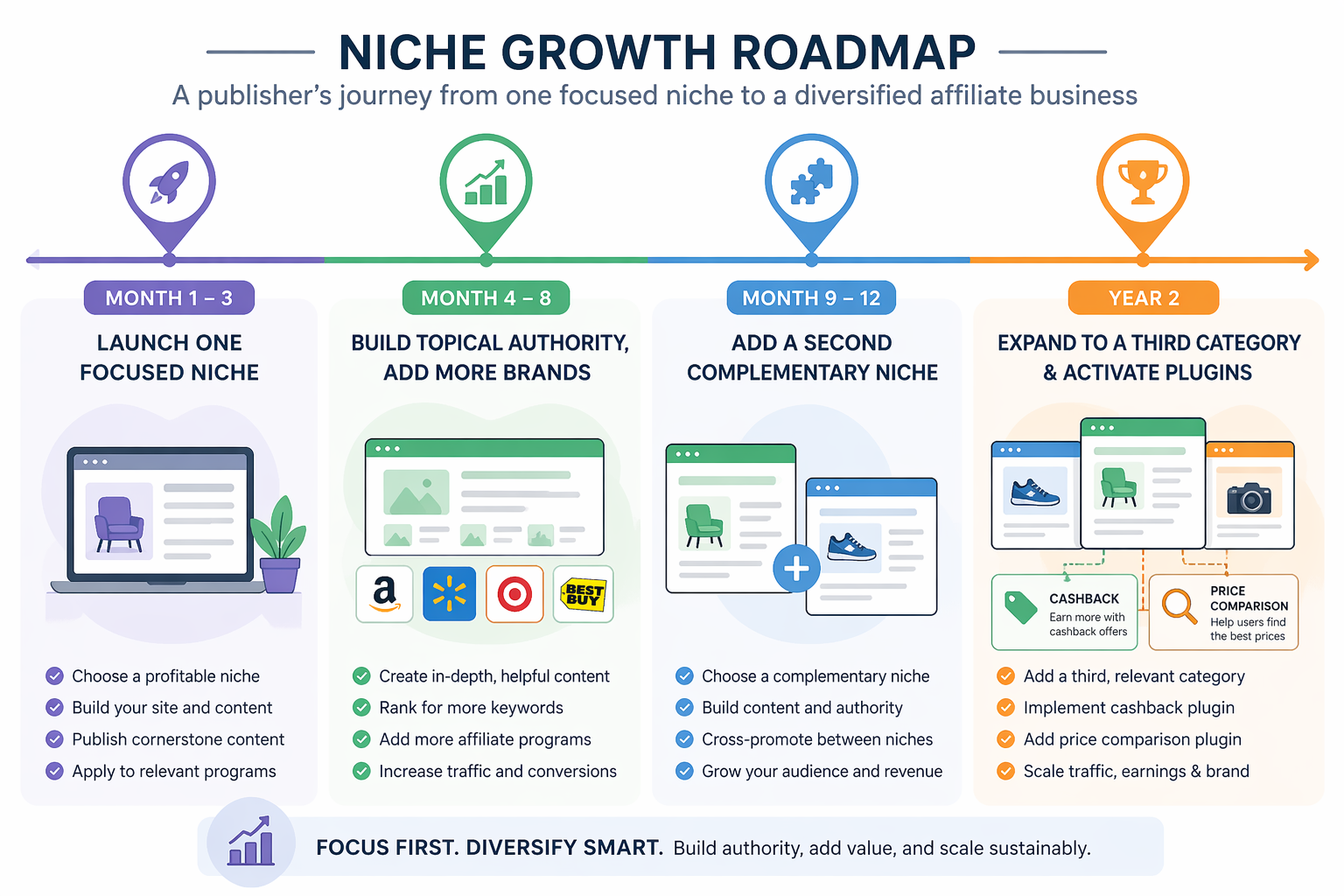
Building the Right Site for Your Niche
Every niche in this guide has specific technical requirements that matter for conversion.
Geolocation for food delivery. Comparison tables for hosting and SaaS. Expiry tracking for time-sensitive offers. Category filtering and search for travel and learning. Community rating features for beauty and gaming. Price history tracking for electronics.
Generic themes often require significant customization. ClipMyDeals is built specifically for coupon publishers, with deal listing structures, affiliate link management, category architecture, supports cashback plugin (optional add-on), price comparison plugin (optional add-on), and browser extension (optional add-on) already included.
The right niche matched with a platform built for that niche is what separates coupon sites that grow into sustainable businesses from ones that plateau and stall.
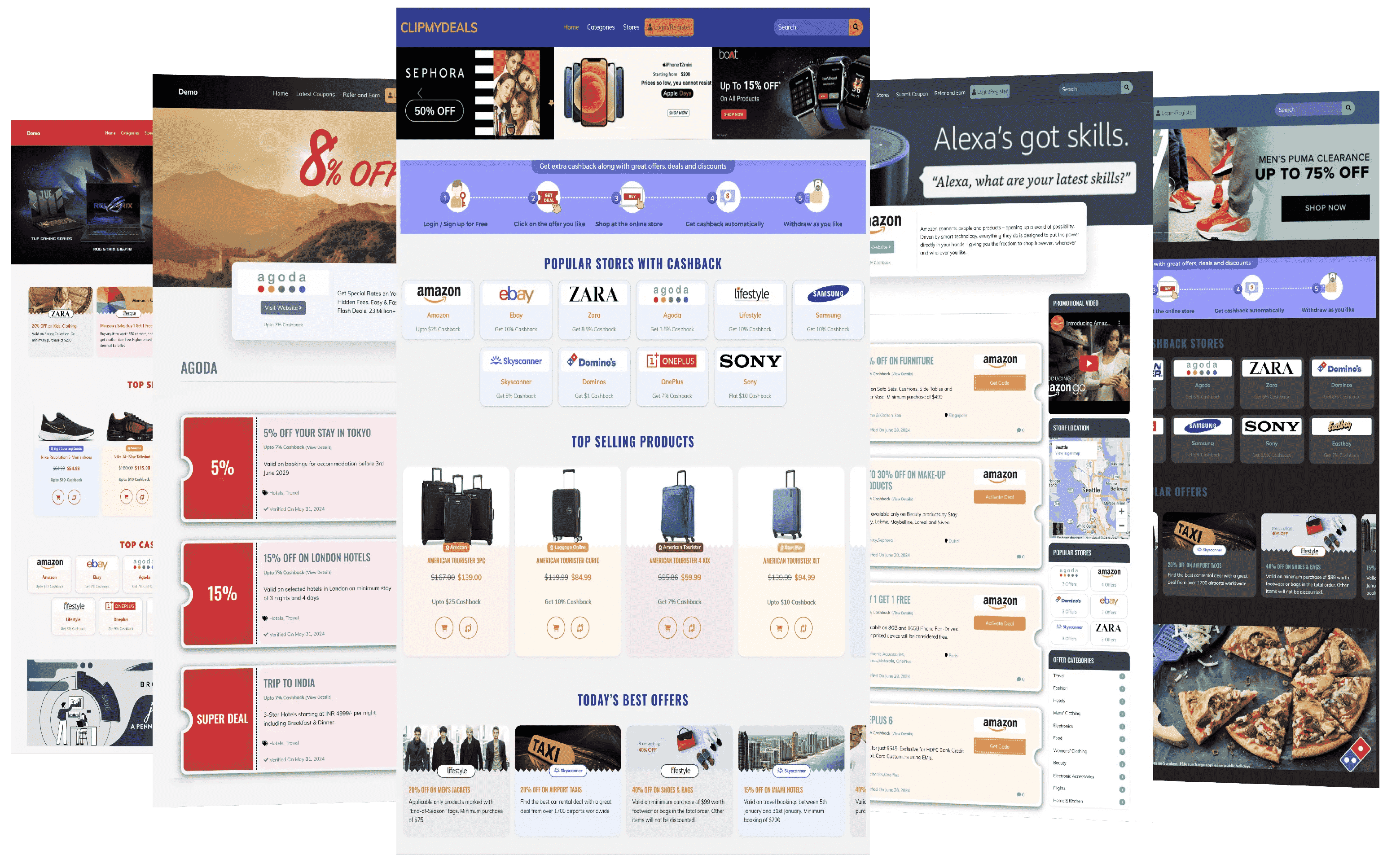
If you’re serious about building a profitable coupon website in any of these niches, having the right foundation is critical. ClipMyDeals gives you everything you need from coupon and store management to affiliate tracking and scalable site structure without relying on third-party plugins. You can get started quickly and focus on growing traffic and revenue instead of managing technical limitations
Ready to build your coupon website? Explore how ClipMyDeals gives you the foundation to launch, grow, and monetize your chosen niche from day one.